
How Bench Warrants Work in Mills County
"Bench warrant" is everyday shorthand for a judge-directed arrest after someone misses a court duty. The paperwork in Mills County may carry a different label: failure to appear, capias, or alias capias. When a fine-only judgment sits unpaid, Texas law allows a capias pro fine, which runs on its own rules. Before you act, ask the court to name the exact instrument in your file. A missed arraignment, hearing, citation setting, or payment order may all be behind it, and the docket and notice control what happens next. Those are questions to raise with the clerk, not conclusions about anyone's case.
Bench Warrant or Mills County FTA?
For Justice or municipal matters in Mills County, Chapter 45A sets its own terms and rules for FTA arrest warrants and capiases pro fine. A label you saw in a web search may not tell you which one applies. Ask the court whether the trigger was a missed appearance, an unpaid judgment, or another order, and whether you need a new date or a motion.
- FTA
- Failure to appear at a required court event.
- Capias
- A court process directing custody, with the exact reason set by the case.
- Capias pro fine
- Process tied to an unsatisfied Justice or municipal judgment.
- Recall
- The issuing court withdraws the process and should confirm that action.
Bench Warrant Issuance in Mills County
Issuance turns on Texas law and the local court's own record. For a Justice or municipal FTA matter, the docket can show warrant issue and return dates. The court must tell you whether a hearing, notice, appearance, or payment comes next. Mills County publishes no bench-warrant recall form and no local deadline page. A phone call alone does not prove a recall. Ask for the current status date, and ask how the court will confirm any new setting in writing.
A Missed Mills County Justice Court Date
If a citation setting may have slipped by, go to the Justice Court first, not a general web search. The Mills County court page lists Justice of the Peace Kim Avants and Justice Clerk Tina Covault, with a contact route on the courthouse's first floor. Ask whether an FTA was entered, whether process issued, and how to request a new setting or discuss a recall. The page links an online ticket-payment route. Paying online, though, is no guarantee the court process gets recalled. Keep your citation number handy, ask about any required motion or hearing, and get the next setting in writing.
How Bench and Arrest Warrants Differ
A bench or FTA process grows out of a court obligation. An arrest warrant authorizes custody under a magistrate's order after the process Texas law requires. Each one must be checked with the issuing court in Mills County. The Sheriff may execute process but cannot decide which court action recalls it.
| Question | Bench / FTA Process | Arrest Warrant |
|---|---|---|
| Common trigger | Missed date or unsatisfied court order | Magistrate process tied to an alleged offense |
| Record source | Court that set the missed obligation | Issuing magistrate and case clerk |
| Next step | Ask about setting, notice, recall, or hardship | Contact counsel and the issuing court |
Chapter 45A Recall Rules for Mills County
Texas Chapter 45A covers justice and municipal court FTA warrants, voluntary appearance, good-faith efforts to resolve a matter, and capias pro fine hardship. The statute can affect recall in the situations it defines. It will not tell you which local form to file in Mills County, and it does not promise an unscheduled walk-in will be heard. Read the current Chapter 45A text, then ask the issuing court how its procedure applies. For broader help, the Mills County warrant steps list the local offices and the questions to ask each one.
Check before appearing. No Mills County source confirms a walk-in surrender desk, bond window, or same-day recall. Call the court first and ask whether counsel should contact it.
Clearing a Bench Warrant in Mills County
First, identify the exact court and process. Ask whether the order is active, served, recalled, or reissued; whether an attorney may appear for you; and whether the judge wants a motion, new setting, payment plan, hardship hearing, or bond. For district or County Court criminal cases in Mills County, use the clerk for file access and counsel for strategy.
- Gather the case or citation number and the missed setting date.
- Call the issuing court during its posted hours.
- Ask which procedure and documents the court requires.
- Confirm whether any payment resolves the judgment and process separately.
- Request a written order, recall entry, or new setting after court action.
No Mills County Bench Warrant Form
Mills County publishes no motion-to-recall form, no warrant-specific fee, no bond schedule, and no self-surrender hours, and no office here promises that an attorney can arrange a walk-through. Do not fill those gaps with another county's instructions. The sheriff's main office routes questions; it is not a confirmed bond desk. For county criminal case routing, the County Judge's office page lists the County Court contact, and its coordinator or clerk can point you to the right record source.
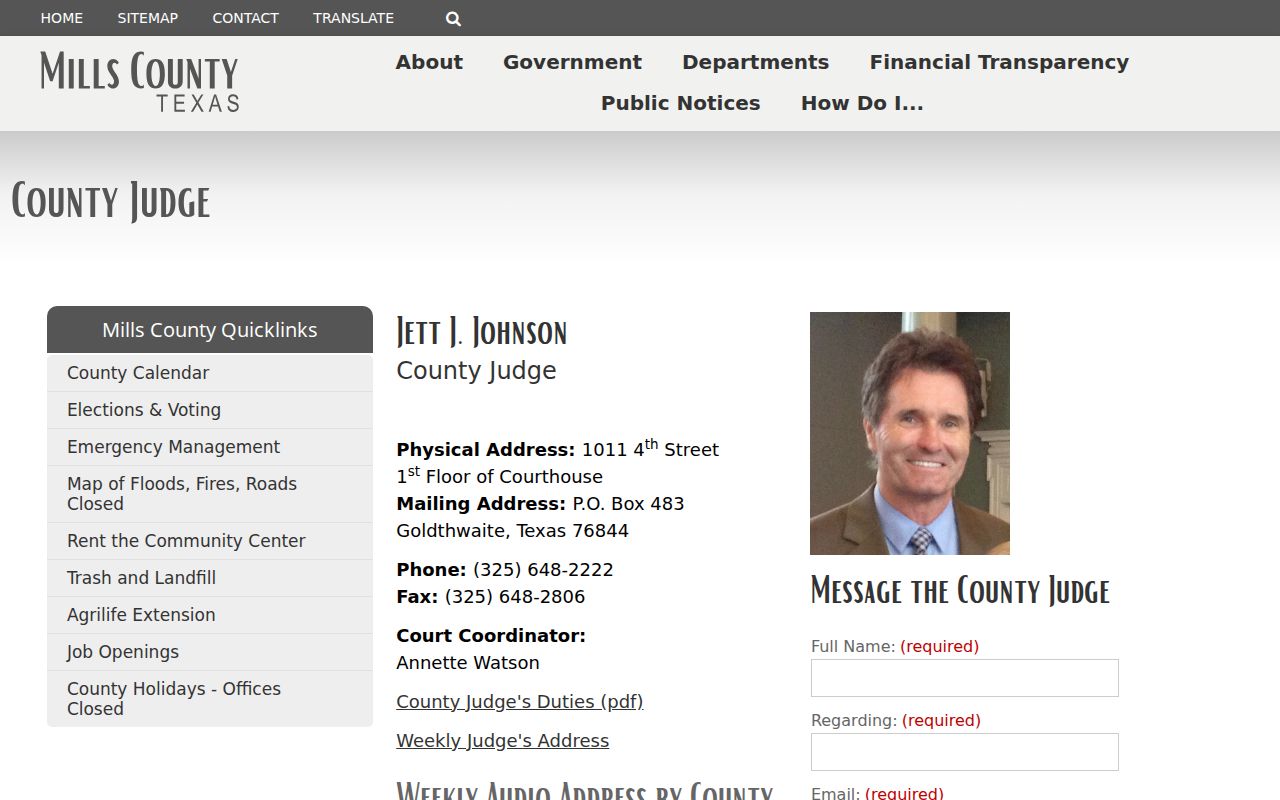
The County Court page is a contact route. Confirm the specific Mills County criminal file custodian before requesting documents.
Mills County Courts That Issue Bench Warrants
The case type points you to the right bench, but Mills County publishes no unified bench-warrant roster. The 35th District Court handles district-level felony matters. County Court carries a criminal caseload. Justice Court handles many Class C and traffic issues. Goldthwaite shows an OCA municipal-court report row, while Mullin offers no current court portal. The County Clerk's page explains its public document portal and court-record links, so ask whether your County Court file sits there or with another office.
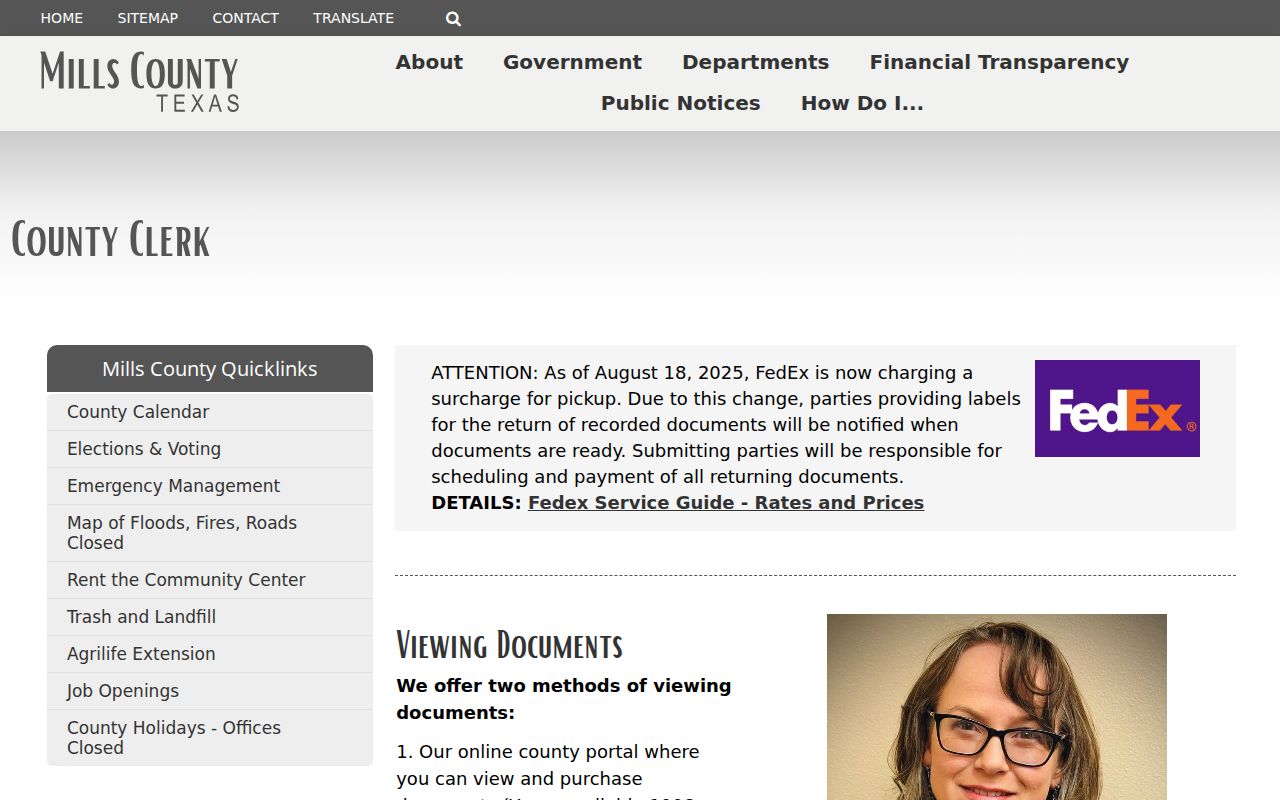
The portal can help locate a court document. Only the issuing court in Mills County confirms current warrant status.
Mills County Sheriff Is Custody Routing
Call the Mills County sheriff's main line with questions about law-enforcement contact or where someone is held. It is not a warrant-status line. It cannot take bond. No court process gets cleared there. Recall, hearings, and orders all belong to the judge, while the clerk explains filing and how to see the record. So split the roles before you call. After any action, ask the court for written status; if a license renewal block comes up, DPS handles the driver-record side and the reporting court handles the case itself.