
How Arrest Warrants Work in Mills County
Texas law treats an arrest warrant as a written order from a magistrate. It tells an officer to arrest someone. A sworn complaint usually starts the process, and a judge reviews it for probable cause before anything issues. The details live in the case file. Which court, which paper, and which step all matter. The Mills County website is not a warrant database, and the sheriff's Most Wanted page is a selected list rather than a full index of outstanding warrants. If the question is personal, start with the court and clerk tied to the case, and ask counsel about timing and appearance choices before visiting any office. Mills County posts no self-surrender schedule.
Mills County Art. 15.02 Warrant Fields
Chapter 15 of the Texas Code of Criminal Procedure sets the formal parts of arrest process. Article 15.02 spells them out. The warrant must identify the person and the offense. The magistrate's signature and title go on it too. A case file may also link the complaint or affidavit, the cause number, a bond notation, the serving agency, and later return or recall entries. Treat those as questions for the clerk, not as promises of what a public result will show. Mills County publishes no blank warrant form, and juvenile or investigative records can face added access limits.
Arrest Warrants: What They Contain
What might a released record show? A cause number, the court, the offense, the magistrate, an issue date, and any later service or recall action. The detail varies case by case. Mills County's Tyler portal shows no warrant status field on its public landing page.
| Warrant number | No public sample found Ask the issuing clerk for its identifier. |
|---|---|
| Offense | The charge or alleged violation tied to the process. |
| Magistrate | The judge or magistrate who authorized the order. |
| Return | A record of service or attempted service, where available. |
| Bond | Confirm the amount and terms with the issuing court; no local schedule was found. |
Mills County District Arrest Record Route
The Mills County District Clerk's page names that office as the route for district court pleadings and criminal papers. The 35th District Court office sits in Brownwood. It is not at the Goldthwaite courthouse. The County Clerk page points to a county document portal and re:SearchTX, though the right custodian for a specific county criminal file should still be confirmed. Bring a case number if you have one. Ask which file holds the warrant. Ask whether a public copy exists. A clerk can explain record access, not give legal advice or promise that a warrant will be recalled. The 35th District Court page gives the verified local court office route.
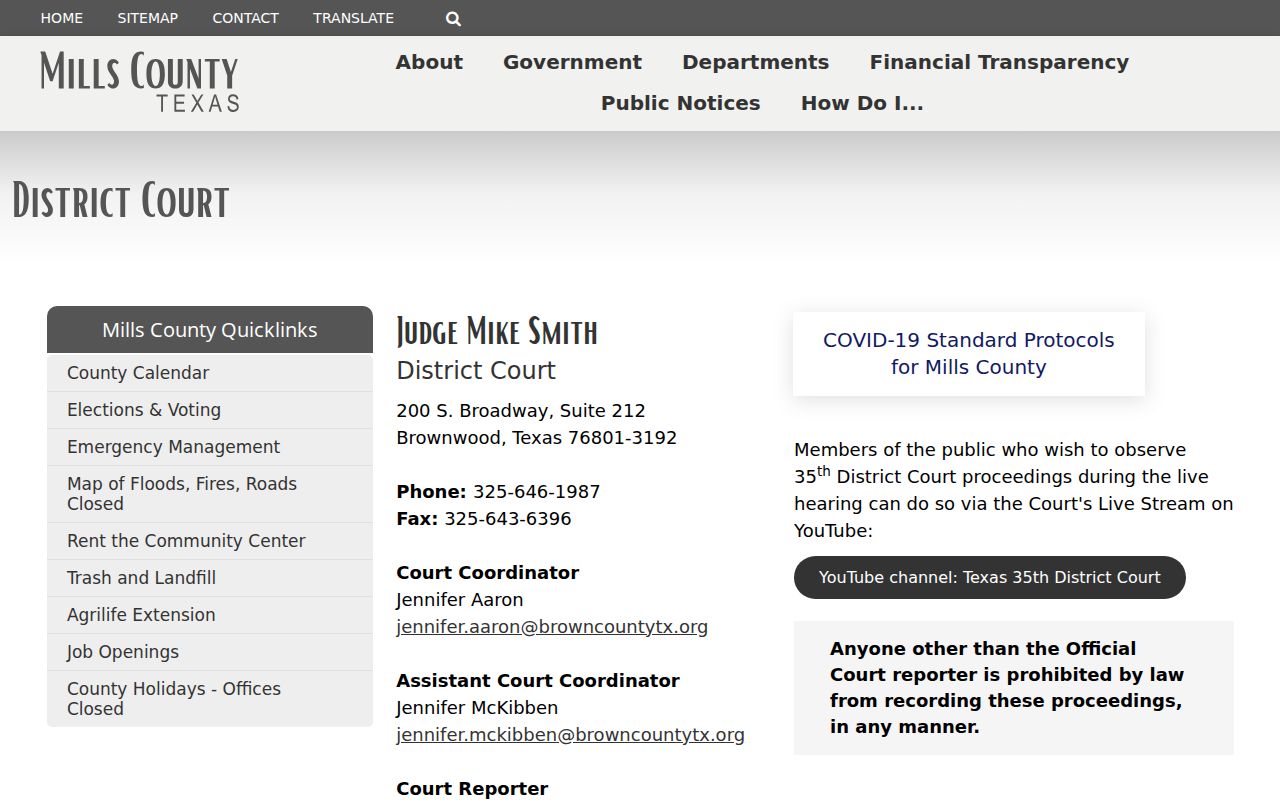
The court contact pins down the right district office. In Mills County, confirm any case-specific appearance question with counsel and the court itself.
How Warrants Get Served in Mills County
A magistrate or judge issues the warrant. Who serves it varies. A sheriff's deputy, a city officer, a constable, or another authorized peace officer may carry it out, depending on the warrant and local assignment. Mills County's public pages post no serving-agency roster or warrant-unit chart. The sheriff's page lists its main office and phone. It names no warrant desk, bond line, or walk-in surrender counter. Contact it for routing only. Then confirm the court process with the issuing office, and see the official Mills County Sheriff contact page for current office details.
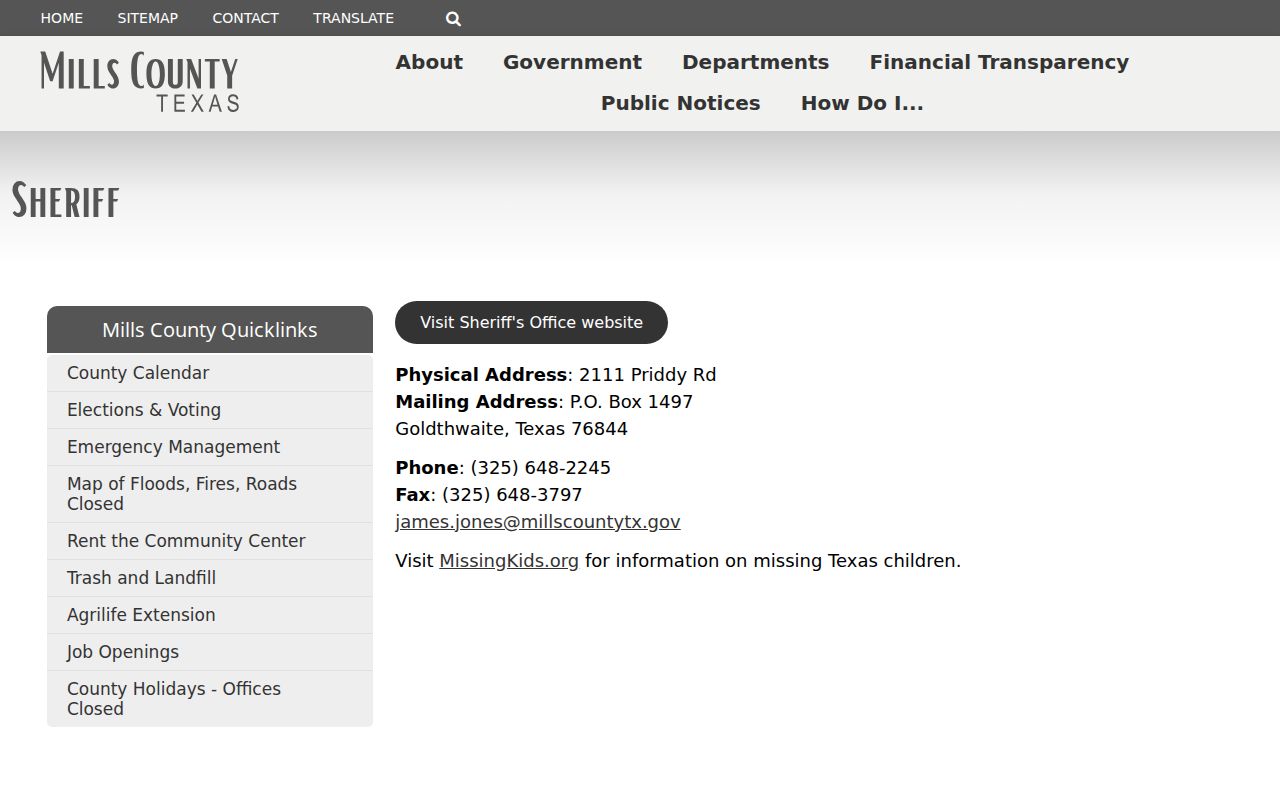
In Mills County, the sheriff's office handles law enforcement and custody routing, while any court action on a warrant stays with the issuing court.
Federal Warrants and Mills County Arrests
Federal cases run on a separate track. Mills County belongs to the U.S. District Court for the Northern District of Texas, San Angelo Division. PACER and its Case Locator search federal case information. Neither is a public warrant database. Sealed or unexecuted process may not appear. The federal clerk can route a docket question, and a federal court or lawyer must handle appearance, bond, or sealed-process concerns. County clerks and the Mills County Sheriff cannot clear a federal warrant. Use the official PACER Case Locator for federal case records, with those limits in mind.
A docket search tied to Mills County can identify a federal case, but it cannot confirm that no federal warrant exists.
Arrest Warrants, Summonses, and Bench Warrants
Each paper asks something different. An arrest warrant authorizes custody on its terms. A summons tells a person to respond or appear. A bench or FTA warrant follows a missed court setting, and a capias pro fine ties to an unsatisfied Justice or municipal judgment. Ask the issuing court in Mills County which document sits in the file.
| Record | What It Does | Who Can Explain It |
|---|---|---|
| Arrest warrant | Commands an officer to take a person into custody. | Issuing magistrate or clerk. |
| Summons | Calls for a response or court appearance. | Court named on the notice. |
| Bench / FTA process | Follows a missed court obligation. | Court that set the date or order. |
Mills County Arrest Check Limits
A case record can lack any public warrant field. A Most Wanted entry can be hand-picked or stale. A no-result search may just mean the wrong court, a spelling problem, a restricted record, or a coverage gap. Check with the court before trusting any online screen. Texas Chapter 15 governs issuance and execution. Chapter 552 opens many records but keeps exceptions, including some active law-enforcement information. A Mills County PIA request cannot force release of every warrant file.
Handling an Arrest Warrant in Your Name
A warrant in your own name calls for a lawyer first, then a call to the issuing court in Mills County. Ask if your attorney can appear for you. Ask whether a motion or hearing is required, and what bond amount and terms attach. Get any recall or service confirmed in writing. Mills County publishes no arrest-warrant recall form, bond schedule, or set self-surrender hours, so the clerk's office is the place to learn the exact steps for your case.
Plan with counsel. Do not assume that a phone call, an online payment, or a visit to the sheriff’s office resolves an arrest warrant.
Hang onto the case number, the Mills County court name, and every written instruction you receive. Also ask whether the officer or agency was told of any later court action.
Mills County Juvenile Warrant Access
Juvenile files play by different rules. Texas Family Code Chapter 58 keeps them confidential, so never put a young person's name or case details into a public request or a general warrant search. Ask a Mills County lawyer or the court directly who may request the record. Adult records are easier, but a request should still be narrow: name the court and the record type. The Texas Family Code Chapter 58 spells out the limits. For a specific file, the issuing court can say whether it is public.